- Curetify
- Posts
- Last Week in Health: Do ultra-processed foods affect the aging brain like addictive substances?
Last Week in Health: Do ultra-processed foods affect the aging brain like addictive substances?
Why cravings and loss of control are not a failure of willpower, but a result of food design

Marcel Gärtner
February 02, 2026
Lately, I’ve been paying more attention to the small things that shape how I feel each day. Not big health goals or strict rules, but the quiet habits that slip by unnoticed. What I eat when I’m tired. How much I move when life feels busy. How my body reacts when routines stay the same for too long.
What stood out to me in recent research is how human these patterns are. Highly processed foods pulling us in without us meaning to. Stress building up simply because we sit too much. Movement helping the brain stay younger. Nutrition needing to change as we age. Even something as simple as a filling breakfast setting the tone for the whole day.
None of this feels extreme or overwhelming. It feels real. It reminds me that health is not about willpower or perfection. It is about understanding the body a little better and making small choices that support it, one day at a time.
Ultra-processed foods under the spotlight

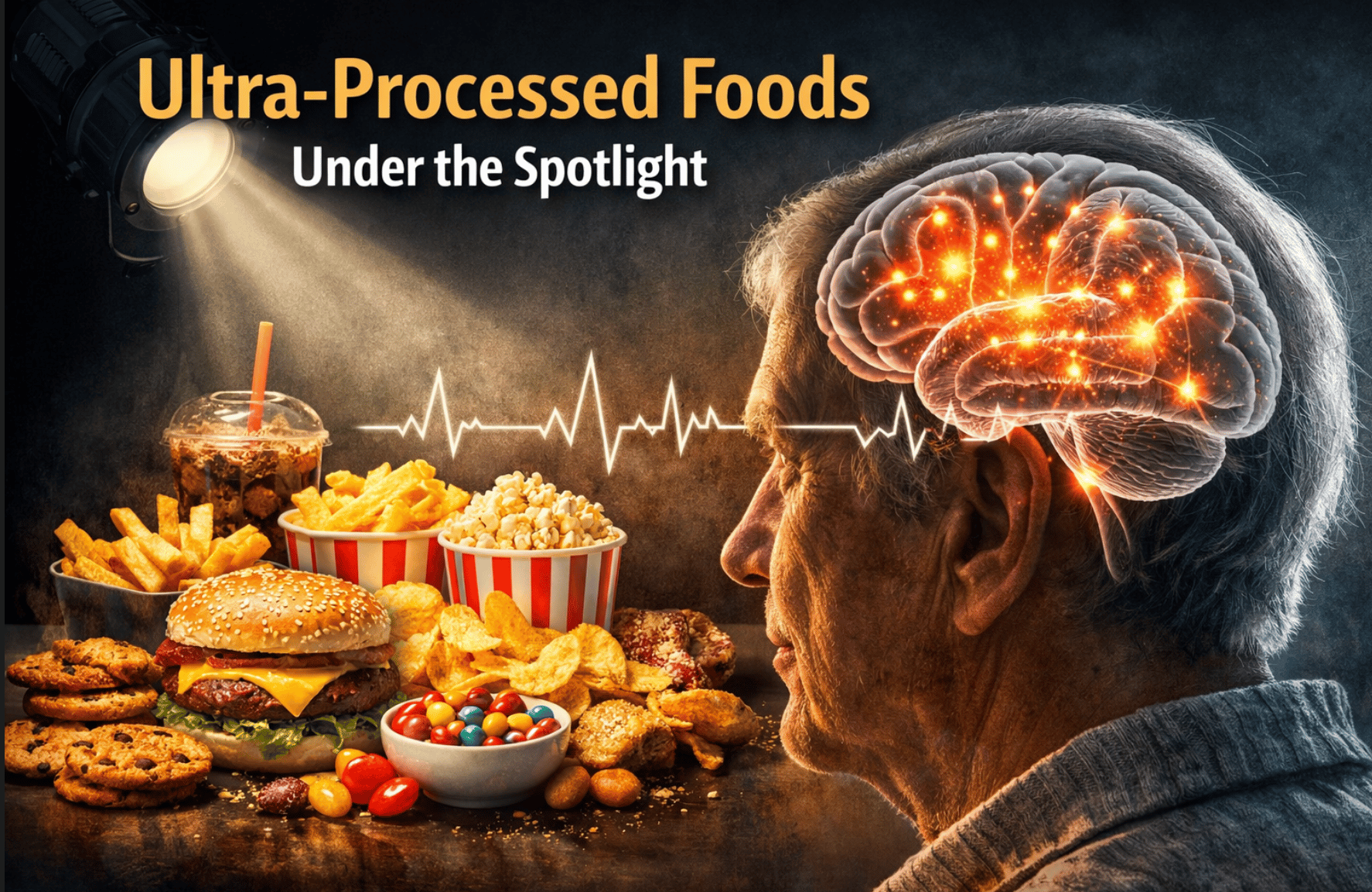
A new large study suggests that ultra-processed foods can create addiction-like eating behaviors in adults, similar to how the brain reacts to substances like alcohol. This effect appears to be especially strong in people between the ages of 50 and 80.
These foods are designed to be extremely appealing, combining sugar, fat, salt, and flavorings in a way that strongly activates the brain’s reward system. The result is that many people experience cravings, loss of control, and repeated eating even when they are no longer hungry or truly enjoying the food.
For example, someone in their early 60s may plan to eat a small portion of packaged snacks in the evening but ends up eating far more than intended. This is not a lack of willpower. Over time, the brain learns to associate these foods with comfort and routine, making the habit harder to break as people get older.
The study highlights that the problem is not personal failure, but design. Ultra-processed foods are created to keep people coming back. Understanding this can help individuals make more mindful choices and reduce their reliance on these foods, especially later in life.
When We Stop Moving, Stress Slowly Takes Over

Stress does not always come from big problems. Sometimes it grows quietly when the body is not allowed to move. A large study from Finland with more than 3,300 adults shows exactly that. People who were mostly inactive in their daily lives were much more likely to experience long-lasting stress. Their risk was about 18 percent higher compared to those who moved regularly.
When the body stays still for too long, tension has nowhere to go. It builds up in the muscles, affects sleep, and keeps the nervous system in a constant state of alert. Over time, this can make people feel tired, irritable, and overwhelmed, even when nothing dramatic is happening.
Movement works like a natural reset. A simple walk, light stretching, or a short bike ride can help release stress and calm the body. This matters not only for mental balance, but also for heart health, metabolism, and long-term well-being.
How Regular Exercise Can Help Keep the Brain Younger

A recent study followed around 130 adults between the ages of 26 and 68 over the course of one year to see how regular movement affects the brain. The focus was not on extreme workouts, but on simple, realistic exercise that people can fit into everyday life.
The participants who stayed active did about 150 minutes of moderate aerobic exercise per week. This included activities like brisk walking, cycling, or light jogging. Nothing complicated, nothing intense. What mattered most was doing it regularly.
After one year, the results were clear. People who exercised consistently showed measurable improvements in brain health. On average, their brains appeared about 0.6 years younger compared to those who were less active. While that number may sound small, it is meaningful when it comes to brain aging and long-term cognitive health.
Why Meat Can Be Helpful for Very Old, Underweight People

For very old people who are underweight, the goal of eating well is often very different from the goal for younger adults. It is less about “perfect” long-term prevention and more about staying steady on your feet, keeping strength, and getting through everyday life safely. Even a small, unplanned drop in weight can be a warning sign. Doctors often treat losing about 5% of body weight within 6–12 months as medically important in older adults, because it is linked with worse health outcomes and should be taken seriously.
In that situation, protein and calories matter a lot. Many experts recommend that older adults aim for about 1.0–1.2 grams of protein per kilogram of body weight per day to help maintain muscle. For frail or ill older people, the target can be higher (often around 1.2–1.5 g/kg/day) if it fits their health situation. Meat can be useful here because it gives a lot of protein and energy in a small portion, which helps when appetite is low and eating big meals feels hard. This is not about trends. It is about helping a very old, underweight person keep muscle, reduce weakness, and stay as stable and independent as possible (Learn more).
Why a Filling Breakfast Helps You Feel Better All Day
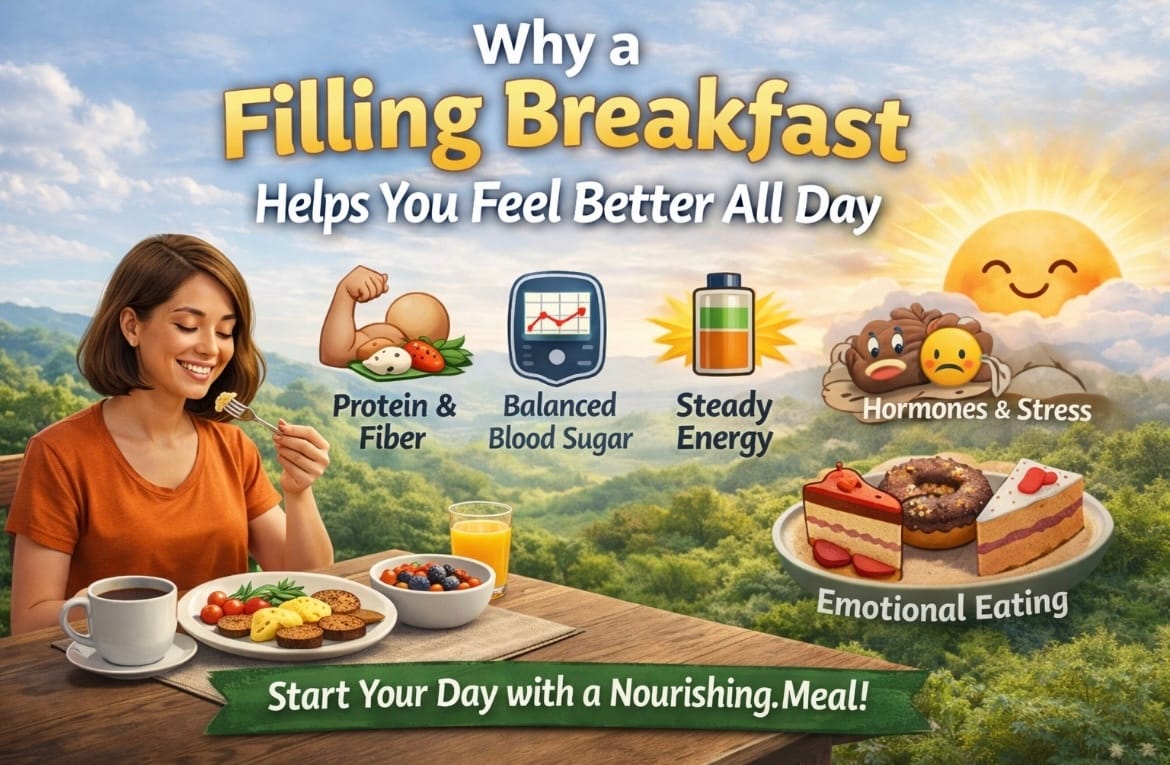
A nutrition expert shares a simple idea that can make a big difference: the first meal of the day should truly make you feel full. It should be more than a quick bite or a rushed snack. A good first meal gives your body a calm and stable start.
When breakfast contains enough protein and fiber, hunger stays away longer. Blood sugar remains more balanced. Energy feels steadier. This makes it easier to get through the day without constant cravings or sudden drops in energy.
Think of the difference between grabbing only a sweet coffee in the morning or sitting down to a meal with eggs, yogurt, fruit, or oats. The second option helps the body feel supported and satisfied for hours.
The expert also reminds us that emotional eating is not just about willpower. Hormones, stress, and blood sugar all influence how we eat. Starting the day with a filling meal can reduce these triggers.
The message is simple and kind. Instead of following short diets, it helps to build small habits that last. A nourishing first meal is one of the easiest ways to support better eating throughout the day.
“Have a good start to the week and feel free to write about topics that would interest you in the future. See you on Wednesday😊”
Stay healthy and enjoy your life