- Curetify
- Posts
- Lat Week in Health: Everything We Were Taught About Healthy Eating Is Being Questioned
Lat Week in Health: Everything We Were Taught About Healthy Eating Is Being Questioned
Why the Old Rules No Longer Apply — and What Really Matters Now

Marcel Gärtner
January 12, 2026
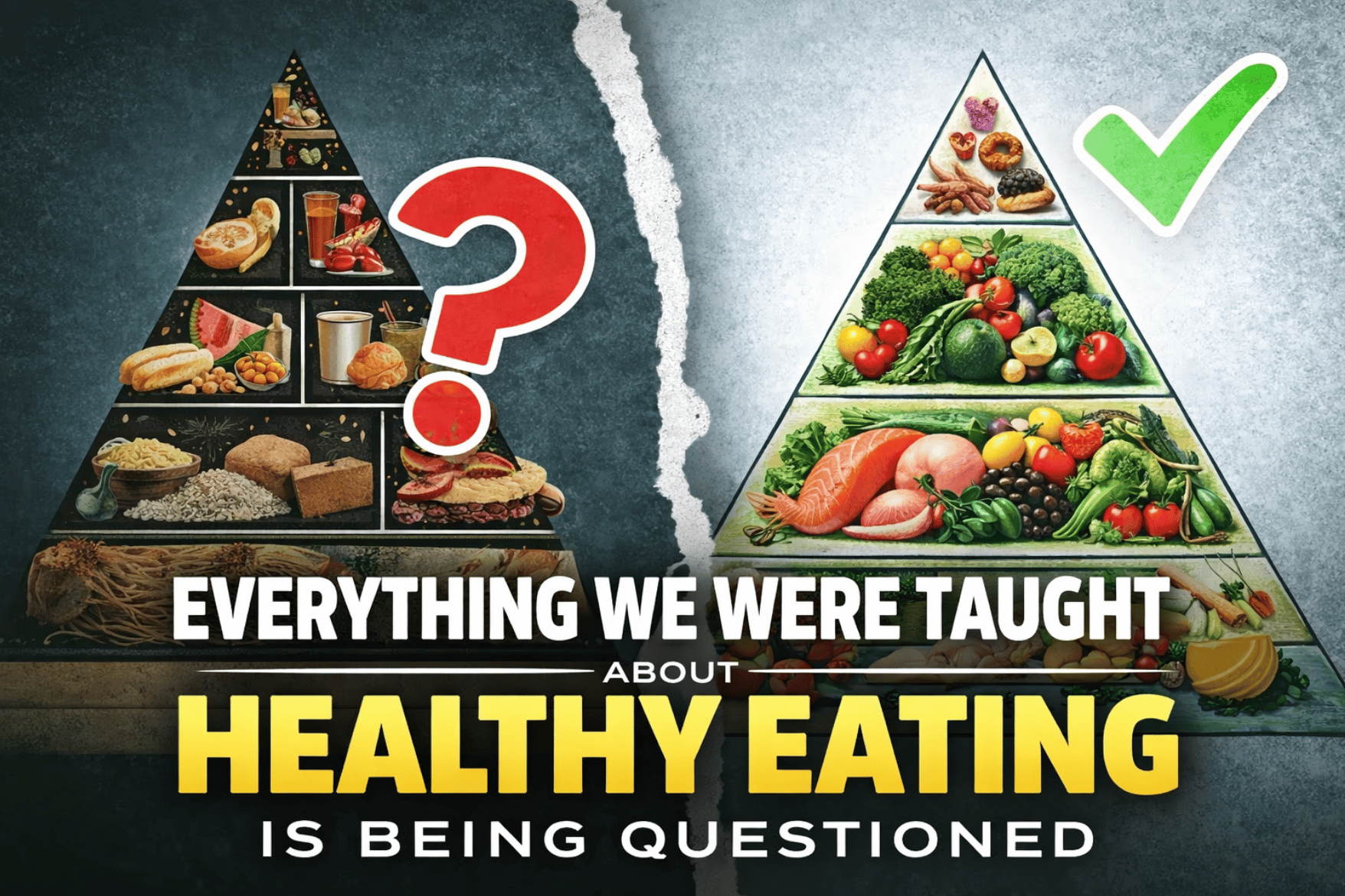
For decades, many of us grew up believing there was one right way to eat healthy — follow the pyramid, count your servings, avoid fat, and don’t ask too many questions. But over time, people started to notice something didn’t quite add up. Why did some “healthy” diets leave us tired, hungry, or confused? And why did what worked for one person fail completely for another?
Now, that old picture of healthy eating is being challenged. The new U.S. Food Pyramid doesn’t just change the layout — it changes the mindset. It quietly asks a bigger question: What if healthy eating was never meant to be rigid in the first place? And once you see what’s different this time, you may realize why so many nutrition rules are finally being rewritten.
The New U.S. Food Pyramid: A More Modern, Flexible Way to Eat Healthy
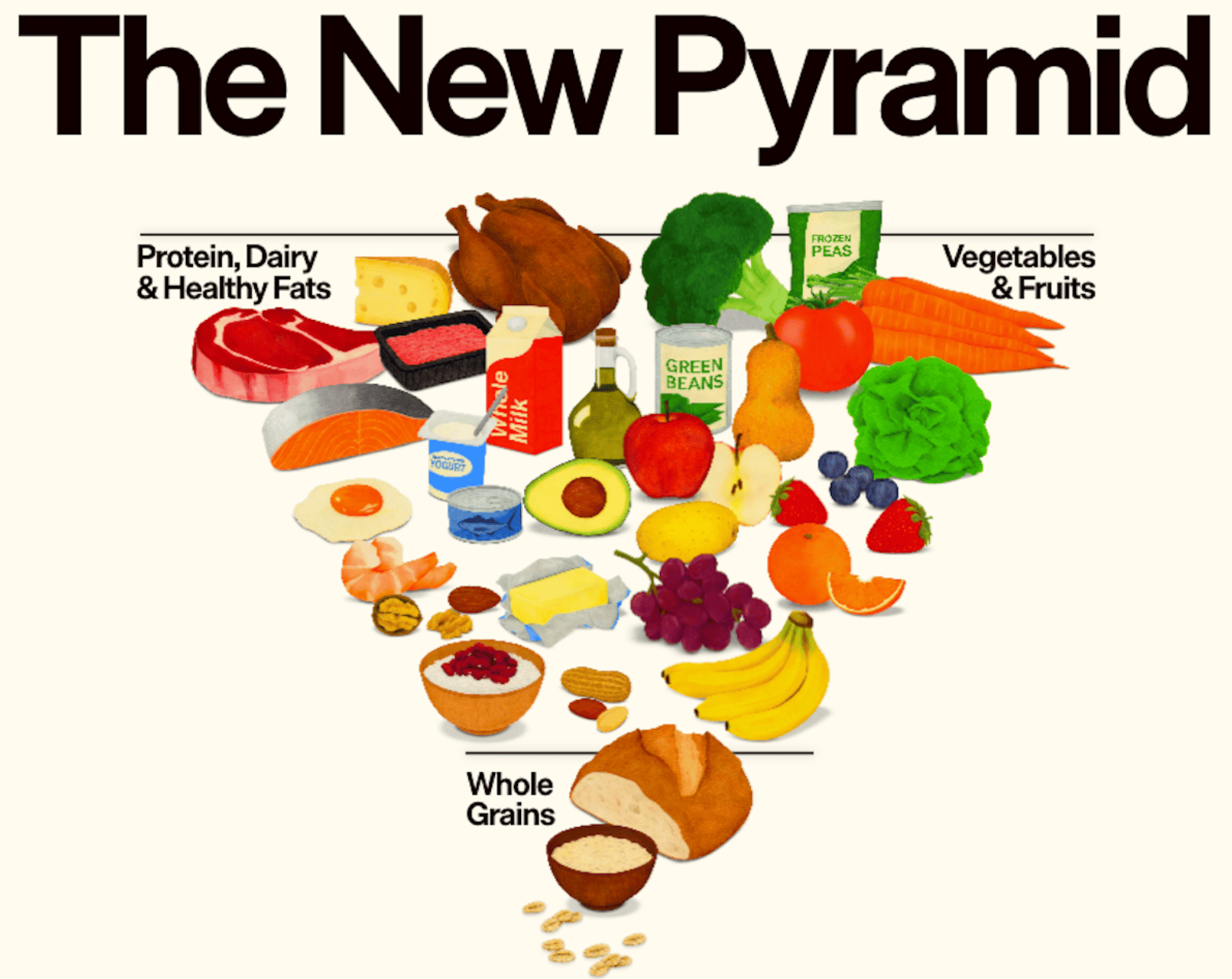
The new U.S. food pyramid shows a shift in how healthy eating is understood today. Unlike older pyramids that focused mainly on grains as the foundation, this updated version puts more emphasis on food quality, balance, and whole foods.
At the core of the pyramid are vegetables, fruits, and high-quality protein sources, highlighting their importance for daily health. Protein is no longer treated as a small add-on, but as a key part of meals because of its role in muscle health, metabolism, and satiety. Healthy fats are also viewed more positively than in the past.
Highly processed foods, added sugars, and refined products are clearly pushed to the margins, signaling that they should be eaten rarely, not daily. Another important message is flexibility: the pyramid suggests that healthy eating is not one-size-fits-all, but should adapt to lifestyle, age, activity level, and personal needs.
Overall, the new pyramid reflects a modern idea of nutrition:
eat real food, focus on nutrient density, and prioritize long-term health over strict rules.
If you want, I can also explain how this differs from the old pyramid or what parts actually matter most in everyday life.
Quitter’s Day: Why So Many People Give Up on New Year’s Goals
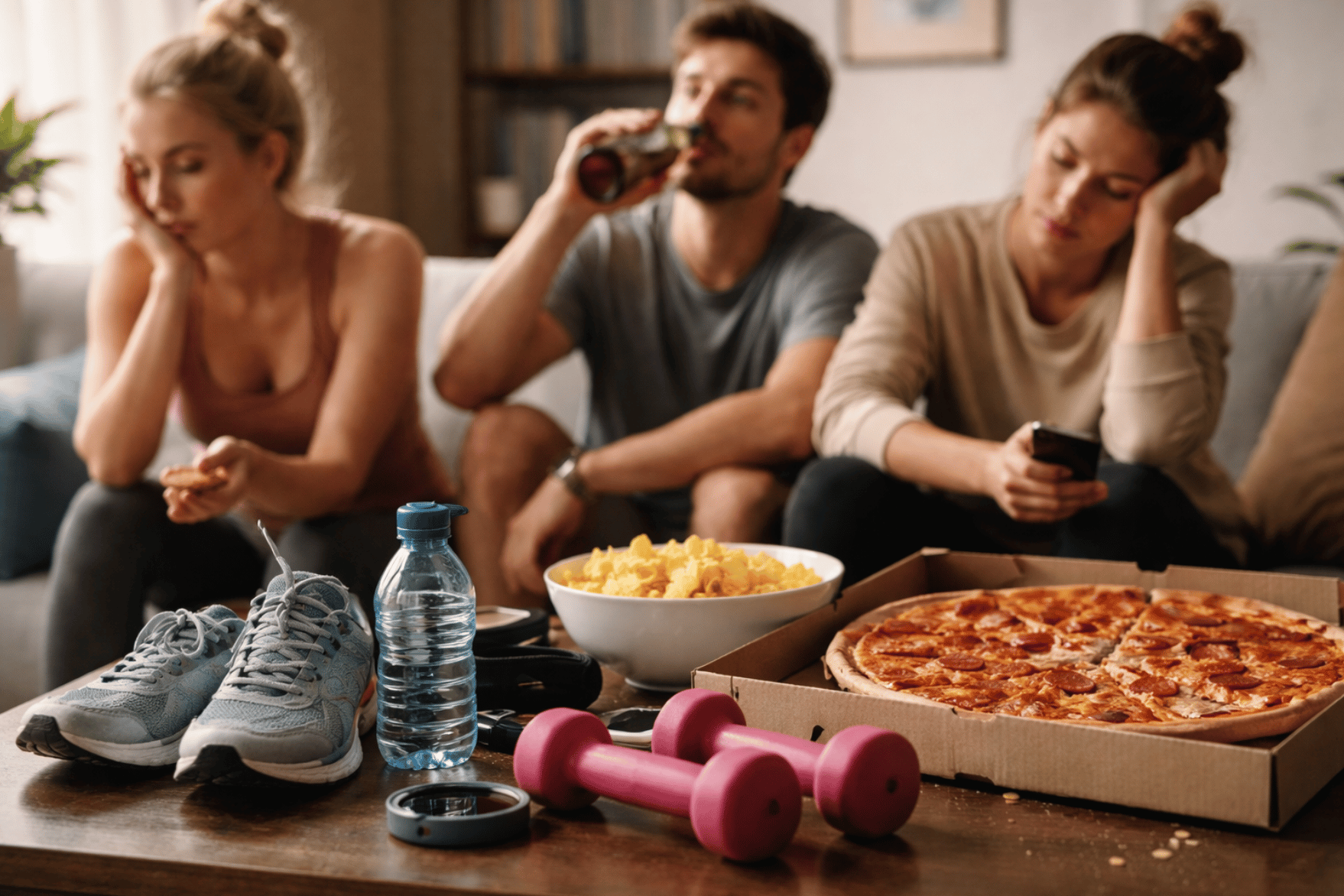
“Quitter’s Day” is the time in January when many people quietly give up on their New Year’s resolutions. This happens every year, and last week a lot of health and fitness media talked about it again. Many people start the year motivated, wanting to work out more, eat healthier, or drink less alcohol. But after a few weeks, real life kicks in.
Motivation drops, schedules get busy, it’s cold and dark outside, and results don’t show up as fast as expected. When people don’t see quick changes, they often feel discouraged and think they’ve failed — even though this is completely normal.
That’s why experts used Quitter’s Day to remind people of something important: you don’t need to be perfect to make progress. Small steps count. A short walk is better than no workout. One healthy meal still matters, even if the rest of the day wasn’t ideal. Consistency is more important than intensity.
The main message is simple and reassuring: falling off track doesn’t mean giving up. You can always restart, adjust your goals, and keep going in a way that actually fits your life.
And that’s exactly why it’s so important that any diet you choose is something you genuinely enjoy. When eating starts to feel like constant restriction or self-control, motivation fades quickly. But when food still brings comfort and pleasure, healthy habits can actually last.
That’s why I personally believe so strongly in approaches like a smoothie-based diet. It doesn’t feel limiting or joyless to me at all. And a lot of people misunderstand this part — many assume it means you’re only drinking smoothies all day, which isn’t true. The smoothies are there to support you, not replace everything. I can still enjoy my favorite meals just like before, without guilt or stress.
For me, that balance is what makes it work. I feel nourished, not deprived. I feel free, not restricted. And because of that, the weight loss feels steady and natural — not forced, not exhausting, just sustainable.
Why Your Diet Should Change as You Get Older 🥗✨
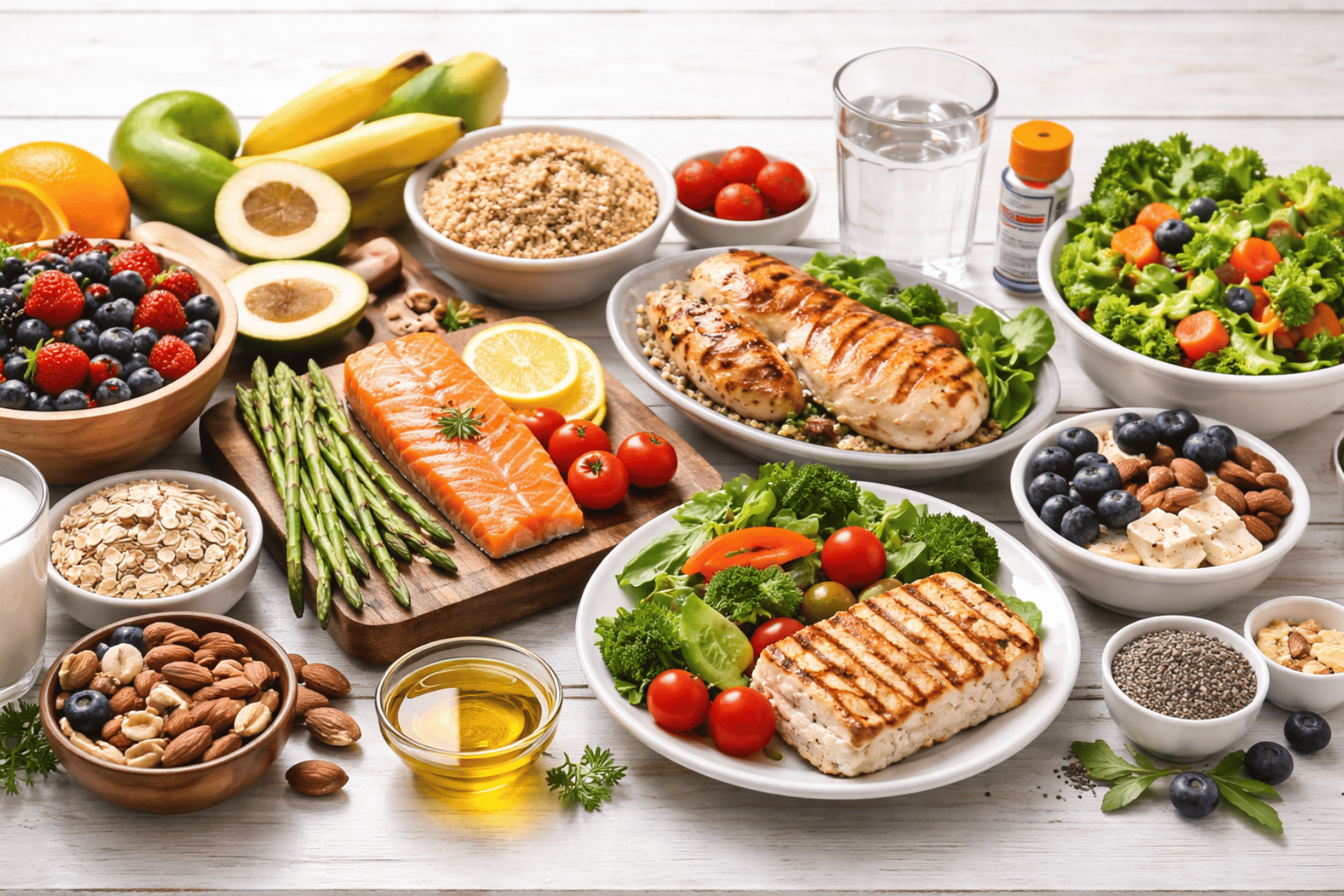
As we move through life, our bodies slowly change — and our eating habits should change with them. What works well at one age doesn’t always work the same way later on.
When we are young, the body needs plenty of energy and nutrients to grow and stay active. In adulthood, food becomes more about balance: having enough fuel for daily life, work, stress, and movement, while protecting long-term health. As we get older, the body usually needs fewer calories, but higher-quality nutrients. Muscles can weaken more easily, bones need more support, and some vitamins are not absorbed as efficiently as before.
A simple example: skipping vegetables or living on quick snacks might not feel like a problem in your twenties. Years later, the same habits can lead to low energy, digestion issues, or loss of strength.
That’s why experts emphasize age-adaptive nutrition — adjusting what and how you eat as your body changes. Eating in a way that fits your current stage of life helps you feel stronger, more energized, and healthier overall.
Why Food Is Becoming the New Medicine 🍎✨
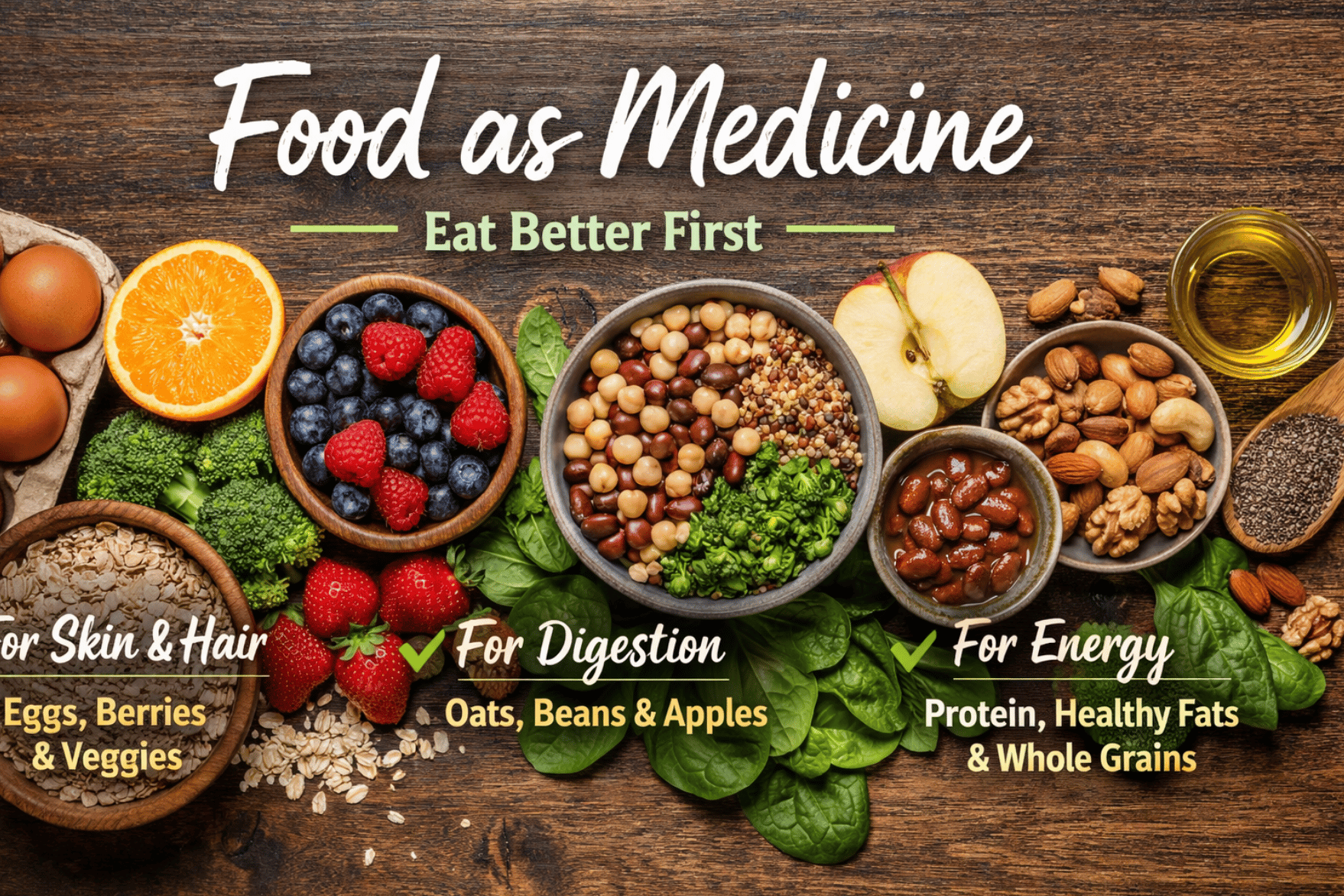
Right now, a big shift is happening in nutrition: people are starting to treat food like daily medicine, instead of trying to fix everything with supplements.
More and more people are realizing that pills can’t replace the basics. If someone eats mostly ultra-processed food and then takes vitamin powders, the results are often disappointing. So the focus is moving back to real, nutrient-dense foods that naturally support the body.
For example:
Instead of a collagen supplement for skin and hair, people focus on eggs, citrus fruits, berries, and vegetables that support collagen production naturally.
Instead of fiber pills, they eat oats, beans, apples, and vegetables to support digestion and gut health.
Instead of energy supplements, they prioritize balanced meals with protein, healthy fats, and complex carbs to feel steady energy throughout the day.
This doesn’t mean supplements are bad — they can still be helpful when needed. But the mindset has changed: food is the foundation, supplements are just support.
In simple terms: people are choosing to “eat better first” because the body understands food better than pills (Learn more).
When Health Tech Starts Listening to Your Body 💚
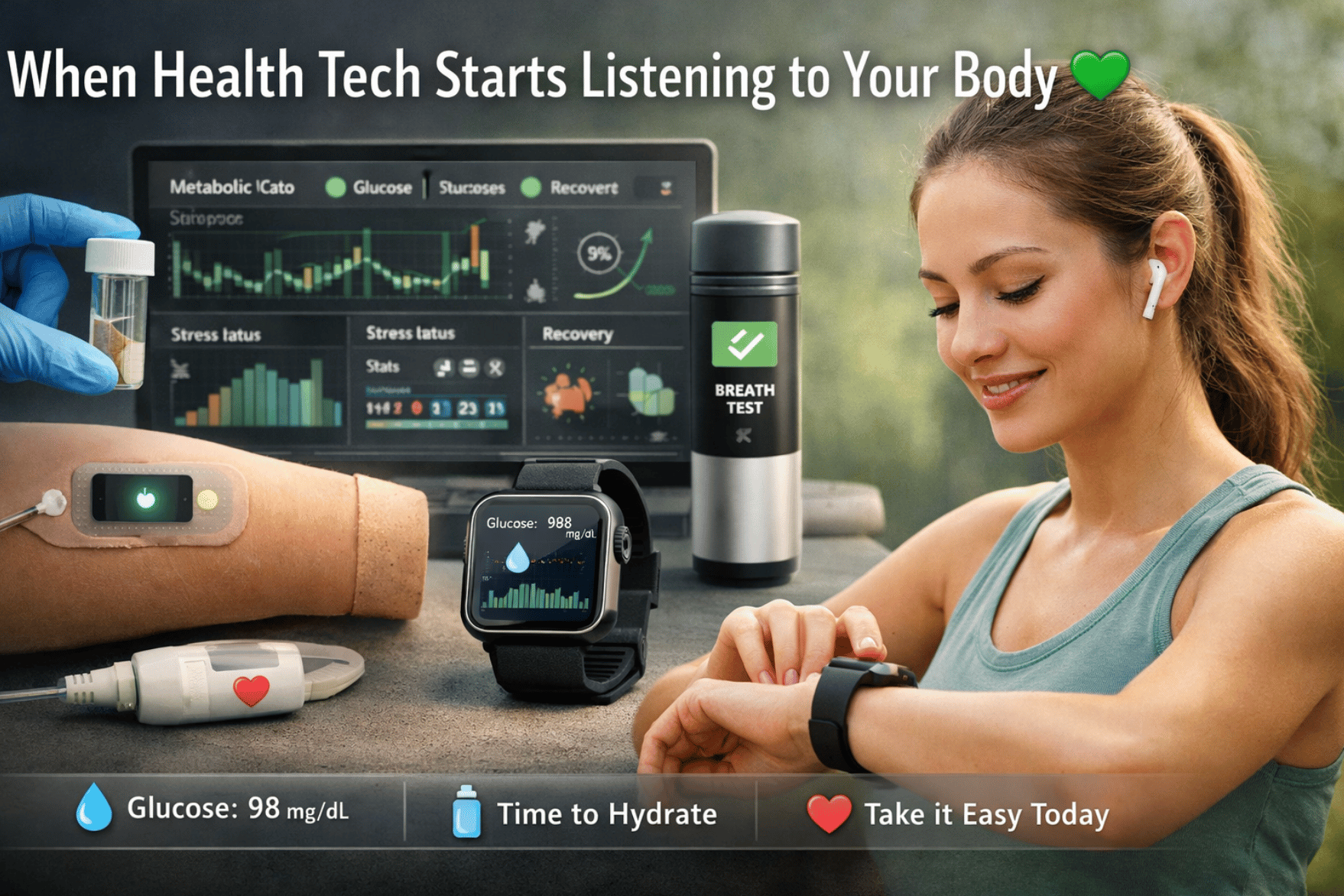
At CES 2026, a clear message came through in the world of health and fitness technology: devices are learning to understand the body more deeply, not just track movement. Instead of only counting steps or measuring heart rate, new wearables are focusing on how the body feels and functions on the inside.
These new tools look at metabolic health, which means how the body uses energy, handles sugar, reacts to stress, and recovers. Some devices can read signals from sweat, saliva, breath, or very small amounts of blood. This helps them notice when your body needs rest, food, water, or gentle movement.
Artificial intelligence plays a big role here. AI acts like a friendly helper that turns complex data into simple, personal advice. Instead of confusing numbers, it might gently suggest slowing down, drinking more water, or choosing lighter food.
Overall, the goal is to make health technology feel more human and more personal. It’s less about pushing harder and more about listening to your body and taking better care of it.
Stay healthy and enjoy your life