- Curetify
- Posts
- Things You Should Avoid in the Kitchen If You Want to Live Healthier
Things You Should Avoid in the Kitchen If You Want to Live Healthier
These were non-negotiables for me to replace — and my body genuinely feels better because of it

Marcel Gärtner
December 19, 2025

Most of us cook on autopilot. We use what’s already there, repeat the same habits, and assume that if food looks fine, everything must be fine. And honestly, that makes sense — the kitchen feels familiar, routine, harmless.
But some everyday cooking habits affect the body in ways we don’t immediately feel. Not in one dramatic moment, but quietly, over time. They don’t show up as pain or sickness right away — they show up as lower energy, heavier digestion, or a body that has to work harder than it should.
The surprising part?
These aren’t big mistakes. They’re small, common things almost everyone does… and once you notice them, you can’t unsee them.
And that’s where it gets interesting.
If your non-stick pan is scratched, it’s time to let it go
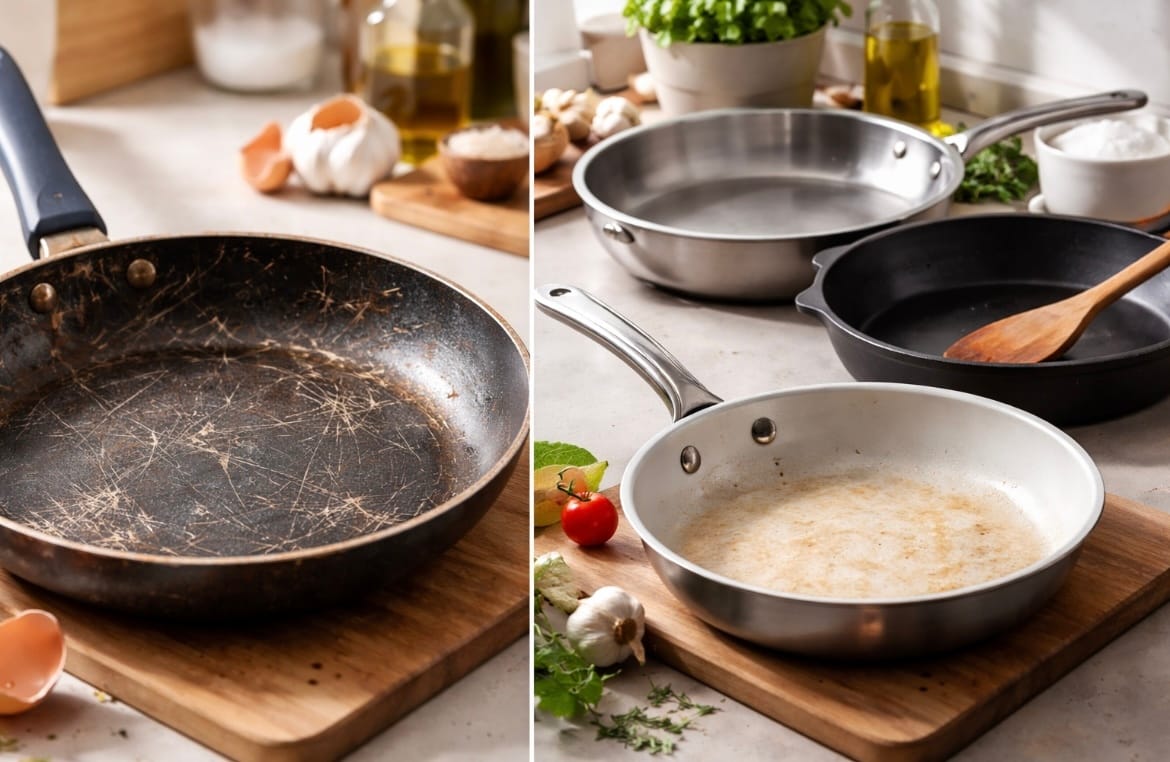
Non-stick pans are convenient, but once the surface is damaged, they’re no longer doing you any favors. Scratches and worn coatings can break down when exposed to high heat, which means substances you don’t want can end up in your food. This doesn’t mean non-stick pans are dangerous by default — they’re fine when intact — but using them past their lifespan simply isn’t worth the risk.
A better option is to replace heavily scratched pans and switch to stainless steel, cast iron, or ceramic-coated cookware. These materials are more stable, handle heat better, and don’t rely on fragile coatings. The improvement is simple: you reduce unnecessary chemical exposure, your pans last longer, and your cooking becomes more reliable and predictable (Learn more).
Stop Cooking Everything on Maximum Heat
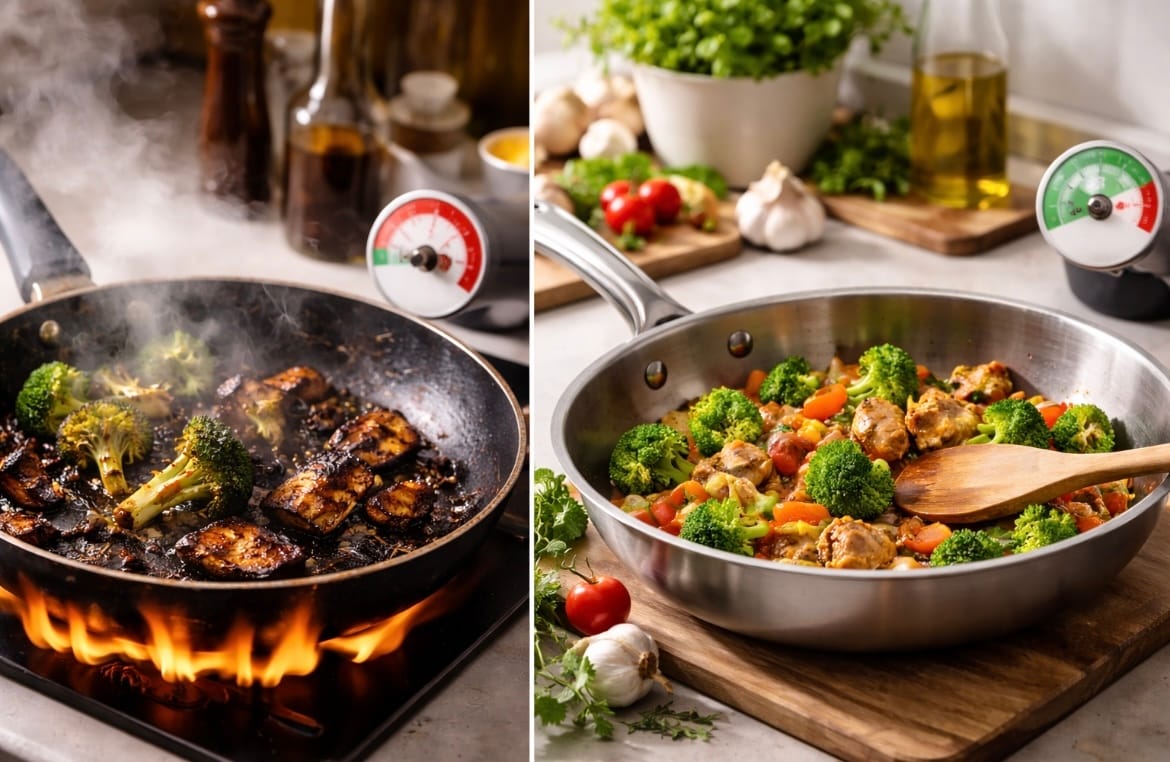
When we cook food on very high heat all the time, we often do more harm than we realize. Extreme heat can destroy valuable nutrients, especially in vegetables, and it causes oils to burn and break down. When oils are overheated, they can form compounds that are harder for the body to process and may contribute to inflammation over time. Burnt or heavily browned food isn’t just about taste — it can irritate digestion and put unnecessary stress on the body, especially when it becomes a daily habit.
A better approach is to cook more gently. Using medium heat most of the time helps preserve nutrients, keeps fats more stable, and makes food easier to digest. High heat still has its place, but it should be used briefly and intentionally, for example when searing meat at the beginning of cooking. This way, food stays flavorful, nourishing, and much kinder to your body in the long run (Read more).
Stop Heating Plastic — Your Body Notices More Than You Think

When plastic comes into contact with heat, it doesn’t stay as stable as we like to believe. During cooking or reheating, plastic can soften and release tiny amounts of chemicals into food, especially when the food is hot, fatty, or acidic. Even plastics labeled as “food-safe” are usually tested for short, cool contact — not for repeated heating over months or years. Over time, this creates an unnecessary chemical load for the body, which can quietly interfere with hormones and digestion.
The better choice is simple and practical: use wooden, stainless steel, or heat-safe silicone utensils, and switch to glass or ceramic containers for storing and reheating food. These materials remain stable under heat, don’t leach substances into meals, and are easier on the body in the long run. This small change reduces daily chemical exposure and supports your body in doing what it does best — digest, recover, and regulate itself naturally (Why it matters).
Stop Cooking With Unstable Oils — Your Body Feels the Difference
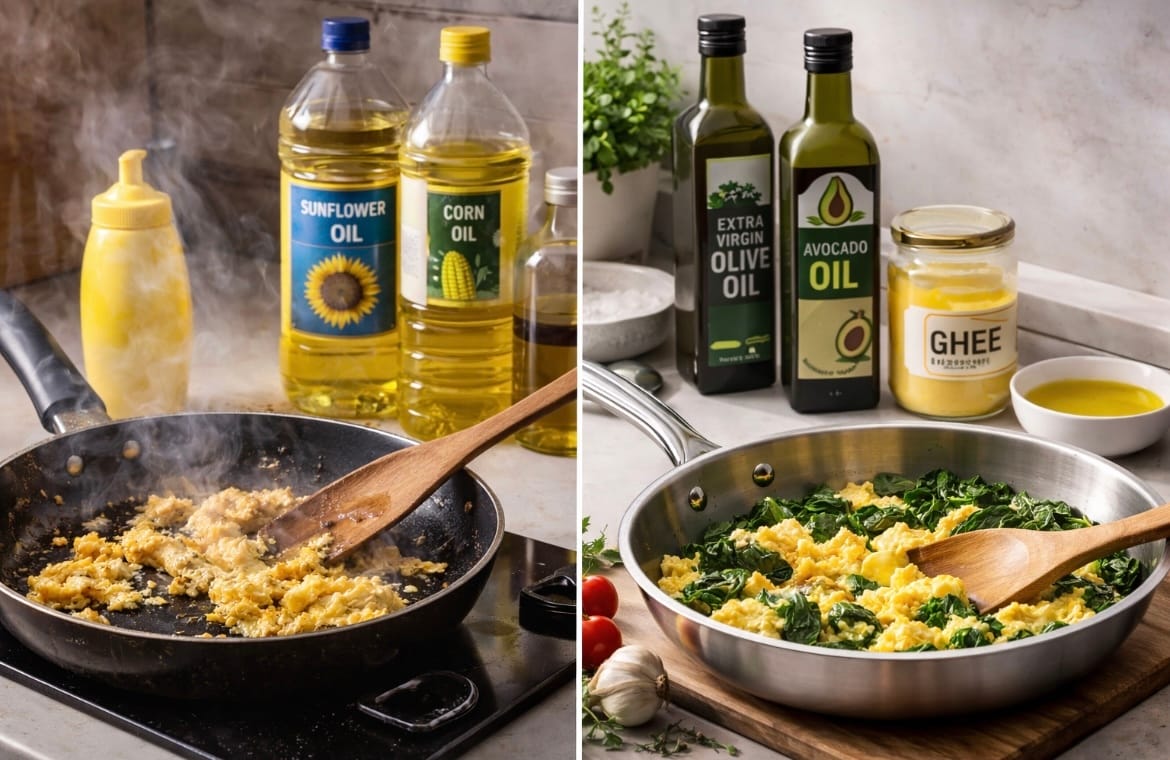
Many people cook almost everything with refined vegetable oils like sunflower, corn, or soybean oil, mostly because they’re cheap and commonly used. The problem is that these oils are very unstable when heated. When they’re exposed to high temperatures, they oxidize easily and form compounds that can promote inflammation and oxidative stress in the body. You don’t feel this immediately, but over time it can affect digestion, energy levels, and overall health.
A much better approach is choosing fats that can actually handle heat. Refined olive oil, avocado oil, or ghee stay stable at higher temperatures and don’t break down as quickly, which makes them easier on your body. For low heat cooking or cold dishes, extra virgin olive oil is ideal because it’s rich in antioxidants and healthy fats that support heart and metabolic health.
The improvement is simple but powerful: by switching to more stable oils, you reduce unnecessary inflammatory stress on your body while still enjoying your food. It’s not about cutting fat — it’s about using the right kind of fat, so your body doesn’t have to deal with damage it never needed in the first place (Learn more).
Salt Isn’t the Problem — Imbalance Is
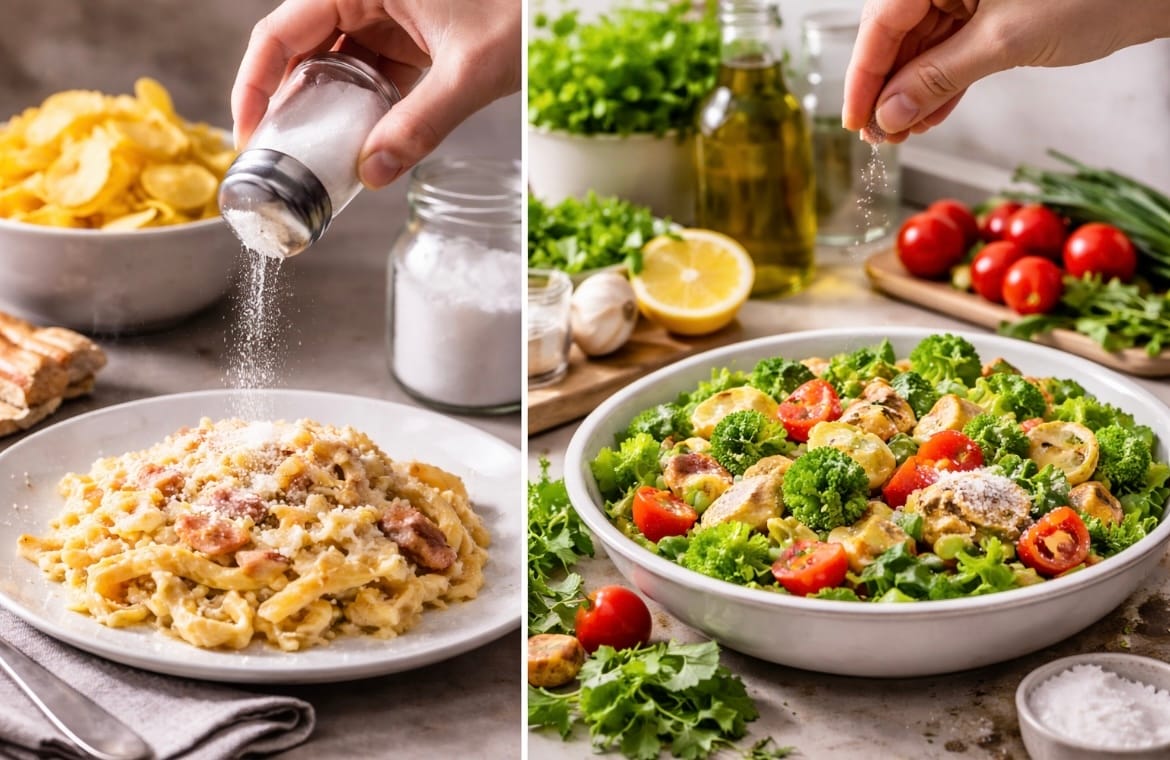
Salt itself is not unhealthy. In fact, your body needs it to function properly. The problem starts when meals are heavily salted but lack balance. Too much salt without enough potassium-rich foods can cause the body to hold on to water, which may lead to bloating and, over time, increased blood pressure. This doesn’t happen overnight, but consistently unbalanced meals can slowly stress the system.
A better approach is not to remove salt, but to use it wisely. Season your food, enjoy flavor, but pair salt with foods that naturally balance it out. Vegetables, fresh herbs, spices, lemon juice, and potassium-rich foods like potatoes or leafy greens help the body regulate fluids more effectively. This balance supports healthier circulation, reduces unnecessary water retention, and allows salt to do its job without negative side effects.
The goal isn’t restriction — it’s harmony. When meals are balanced, your body doesn’t have to fight what you eat (Read more).
“For those struggling with weight loss, I’ve linked a simple 21-day smoothie reset many people use as an easy starting point.”
“Have a wonderful weekend and Comment on which topic I should cover next. See you on Monday😊”
Stay healthy and enjoy your life