- Curetify
- Posts
- Why Vitamin C in Food May Matter More Than Creams and Supplements
Why Vitamin C in Food May Matter More Than Creams and Supplements
Scientists are discovering an unexpected path from food to skin

Marcel Gärtner
January 02, 2026

We are told that health is simple. Eat less. Move more. Watch the number on the scale. But what if that number has been misleading us for years? What if just ten minutes of movement can change the behavior of our cells? What if the food we eat reaches deeper than we ever imagined, into our skin, our liver, even our genes?
Scientists are discovering that health is not built through extremes, but through small signals the body sends and receives every day. Signals triggered by a short walk. By a handful of nuts. By fruit on a plate. By patterns we repeat without noticing…
Why Obesity May Be More Than Just a Number
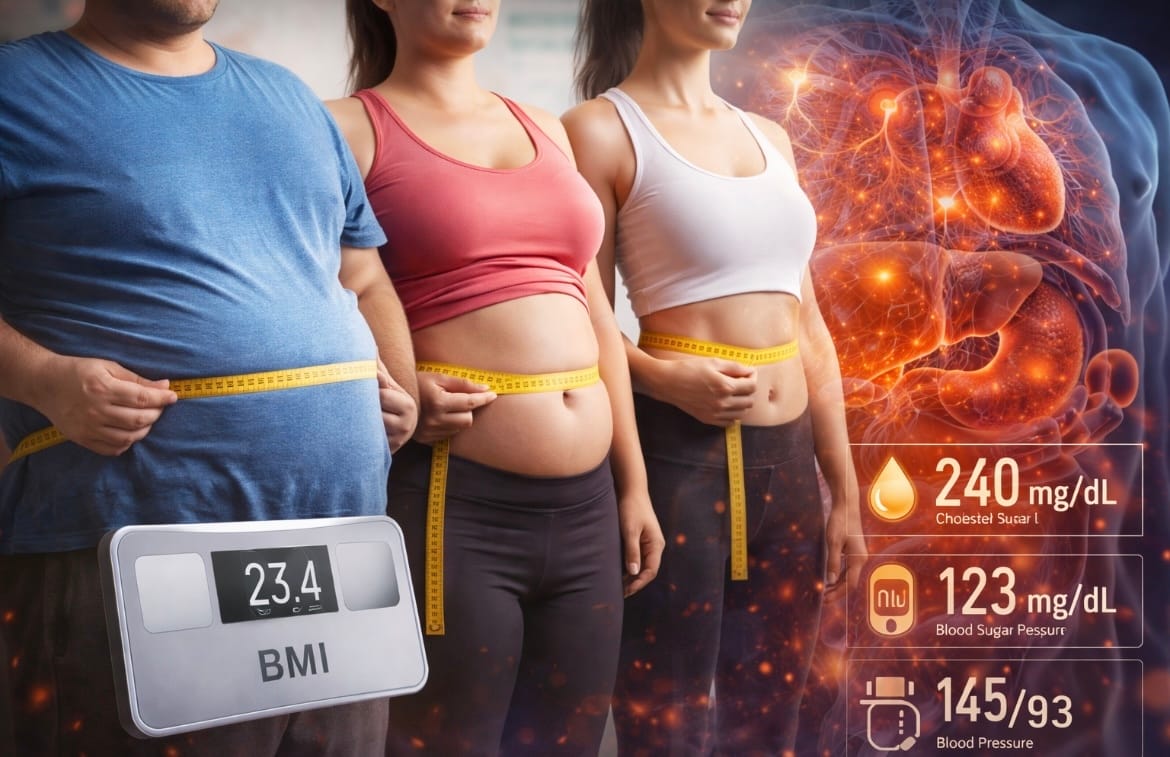
For decades, obesity has been defined using Body Mass Index (BMI), a simple calculation based only on height and weight. But new findings reported by ABC News suggest this approach misses a big part of the picture. When researchers include waist size and basic metabolic health markers, more than 75 percent of U.S. adults could be classified as obese, compared with about 40 percent using BMI alone.
The issue is that BMI cannot show where fat is stored or how well the body is functioning. Fat around the waist, for example, is closely linked to diabetes and heart disease, even in people who appear to be at a “normal” weight. By looking at waist circumference and factors like blood sugar, cholesterol, and blood pressure, researchers get a clearer view of real health risks.
This new way of thinking could change how doctors give advice and when they recommend action. Instead of focusing only on weight, the emphasis may shift toward metabolic health and long-term prevention. The main takeaway is simple: being healthy is not just about the number on the scale, but about what’s happening inside the body (Must read).
10-Minute Workout May Slow Cancer Growth

New research shows that even a single 10-minute exercise session can trigger powerful changes in the body. After short physical activity, the blood shows molecular signals that influence the activity of over 1,300 genes, many linked to immunity, inflammation, and cell growth.
When colon cancer cells were exposed to blood taken after this brief workout, their growth slowed down. This suggests that exercise can quickly activate the body’s natural protective mechanisms, even in very small doses.
The key message is simple and encouraging: you don’t need long or intense workouts to support your health. Just a few minutes of movement can already start beneficial processes deep inside the body.
New research shows vitamin C from food improves skin health from the inside
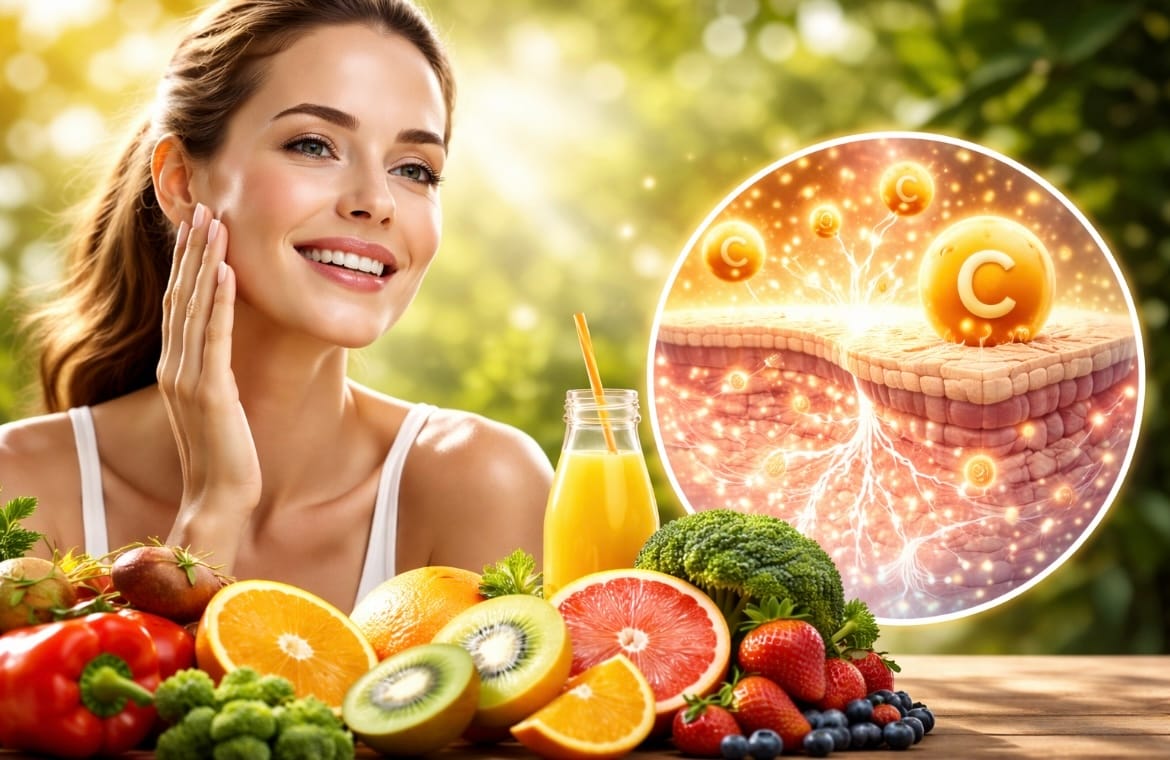
A new study published this past week found that vitamin C consumed through natural foods doesn’t just circulate in the blood — it actually accumulates in the skin and supports skin structure and renewal.
In the study, adults increased their intake of vitamin-C-rich foods (such as kiwi fruit). Researchers then measured vitamin C levels not only in the blood, but directly in the skin tissue. The result was clear: higher dietary vitamin C led to higher vitamin C levels in the skin, along with markers linked to collagen production and skin regeneration.
This matters because vitamin C is essential for making collagen, the protein that keeps skin firm and resilient. While many people rely on topical creams or supplements, this research shows that food-based vitamin C reaches the skin in a measurable, functional way.
Real-life example:
Eating foods like kiwi, bell peppers, citrus fruits, broccoli, or berries regularly may support skin health from within — without relying on cosmetic products.
When Too Much Fat Becomes a Silent Problem for the Liver
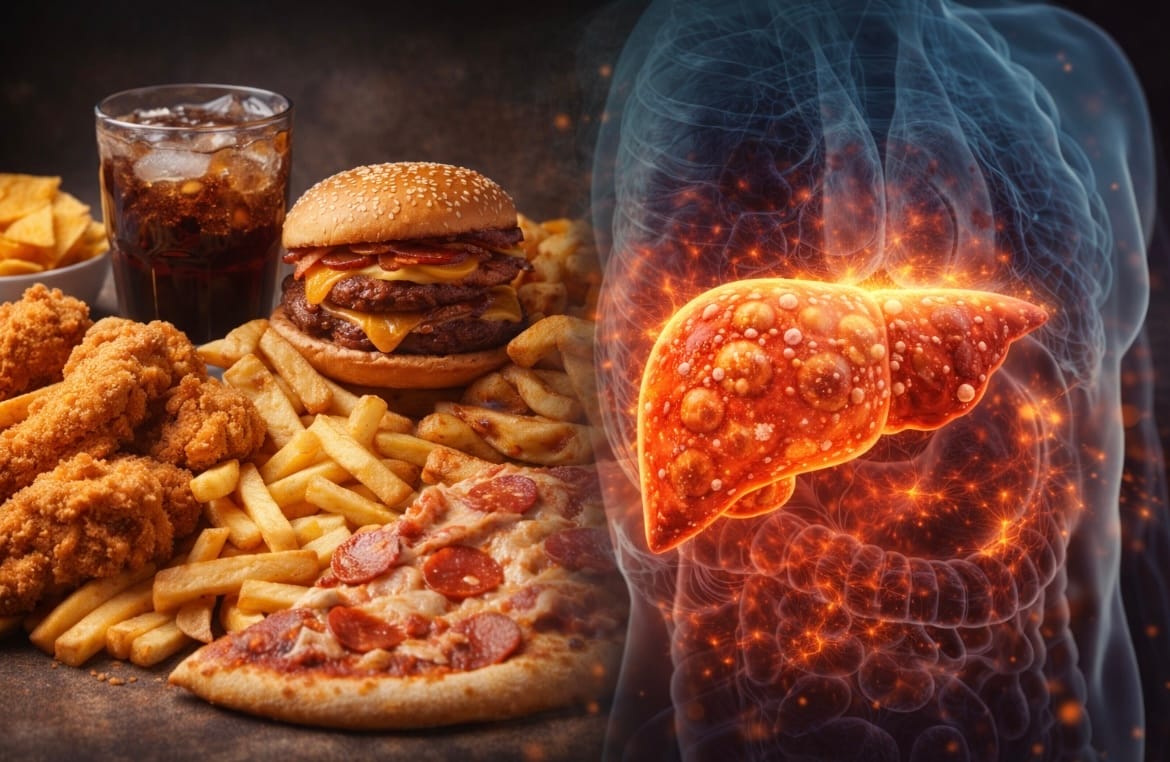
For a long time, a very high-fat diet can seem harmless, especially because its effects develop quietly. New scientific findings discussed this past week show that regularly eating large amounts of fatty, heavily processed foods can slowly push the liver into a state of constant stress. This long-term overload increases the risk of fatty liver disease, metabolic disorders, and, in severe cases, liver cancer.
The liver is responsible for processing fats and regulating energy in the body. When it is forced to deal with excess fat day after day, fat starts to build up inside liver cells. Over time, this triggers inflammation and disrupts normal metabolic functions. To cope, the cells shift into a survival mode, focusing more on growth and repair than on their usual specialized tasks. While this adaptation helps in the short term, it also makes the tissue more vulnerable to long-term damage.
What matters most is not eating fat occasionally, but maintaining a dietary pattern dominated by ultra-processed, high-fat foods, often combined with sugar and refined carbohydrates. The research supports a simple conclusion: reducing industrially fatty foods and choosing more whole, minimally processed options can ease liver stress and protect metabolic health over the long run.
Eating Nuts May Lower Inflammation and Support Heart Health
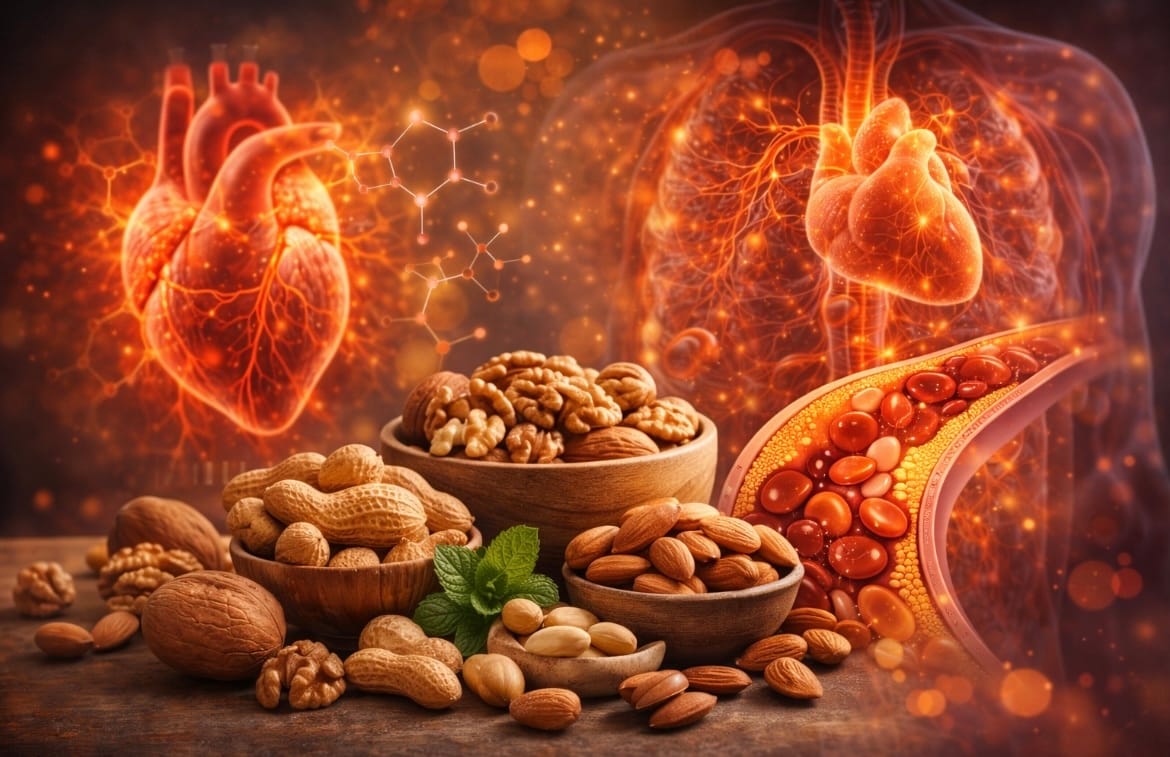
A newly discussed study shows that regularly eating nuts such as walnuts, almonds, or peanuts is linked to lower levels of inflammation and improved blood vessel function. Researchers found that people who consumed nuts several times per week had better cholesterol profiles and healthier markers related to heart disease risk. The effect is believed to come from a combination of healthy fats, fiber, and plant compounds working together, rather than from a single nutrient.
If you’ve ever felt unsure what your body actually needs, The Herbal Remedy Companion was created to gently guide you back to natural, simple recipes you can trust and actually use in everyday life.
“Have a wonderful weekend and Comment on which topic I should cover next. See you on Monday😊”
Stay healthy and enjoy your life